
Squirrel Removal from Michigan Attics
When squirrels move into the attic, the job is finding the way in, checking for young and closing the opening once they are out.
Calls route by ZIP to an independent operator where one covers the address; where none does, they come to Local Core Group, which runs this site.
Squirrels can get into attics through gaps at the roofline, and a National Park Service rodent manual says gray squirrels can gnaw their way in. The work runs in a fixed order: find the entry, get the squirrels out, make sure no young are left inside, then seal the opening with galvanized sheet metal, not aluminum, which squirrels can gnaw through. The young are the reason for that order; the Forest Service says fox squirrels normally have two litters a year.
How do you get a squirrel out of the attic?
Running and scratching overhead can mean a squirrel has found an opening at the roofline, a vent or the chimney. Do not seal the hole first: that can shut the squirrel or its young inside. The Forest Service says fox squirrels mate in mid-December or early January and again in June, with most births in mid-March and July. Removal work means finding the entry, getting the squirrel out, making sure no young are left, and then sealing the opening with galvanized sheet metal rather than aluminum. Ask the operator how they will get the squirrel out and how they will check for young before anything is sealed.
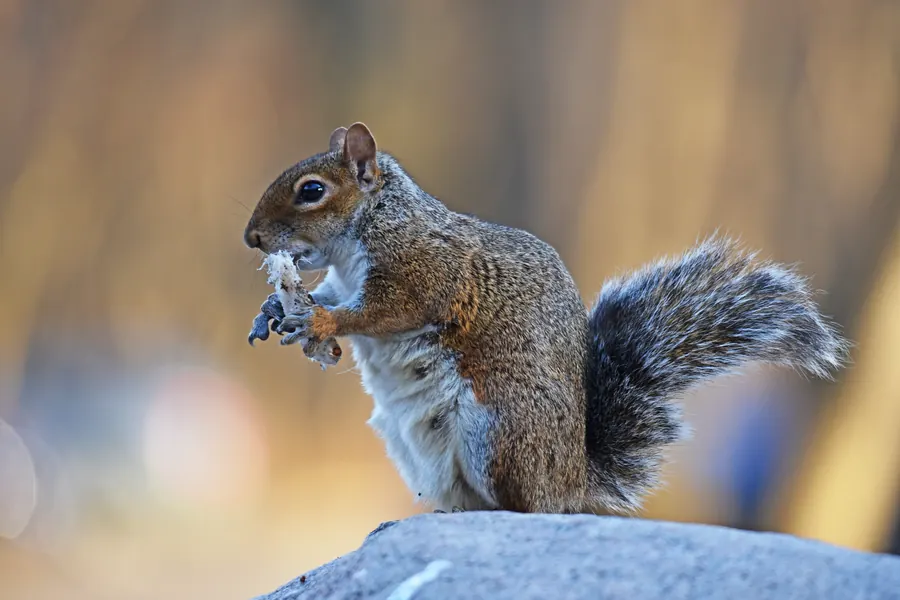
How can you tell it is a squirrel?
The clock helps. The National Park Service says flying squirrels are nocturnal, so people often do not see them, while the Forest Service says red squirrels are active by day. Gray squirrels are out in the open in daylight more than most animals, the Park Service notes. The Internet Center for Wildlife Damage Management’s tree squirrel biology page covers the rest of their habits.
A National Park Service rodent-proofing manual doubles as an inspection list for the outside of the house: limbs that overhang the roof or come within six feet of it, a chimney without a cap, vent pipes without screens, and holes gnawed through siding. It was written for rodents in general, squirrels among them.
Does the time of year matter for squirrels?
Yes, because of young. The Forest Service’s species accounts give the pattern for fox squirrels and red squirrels across their range, not Michigan alone. Fox squirrels mate in mid-December or early January and again in June, with most births in mid-March and July and an average litter of three; the young may not be self-supporting until 12 weeks. Red squirrels usually have one litter a year, typically of four or five young. The National Park Service says gray squirrels have one or two litters a year, depending on food.
Pushing an adult out and sealing the hole without checking for young can leave them inside. Ask the operator how they will make sure no young are left before the opening is sealed.
If young are found on their own, the U.S. Fish and Wildlife Service says a young animal that needs help should go to a licensed wildlife rehabilitator, and that most states require permits or licenses to rehabilitate wildlife. A box in the garage is not the answer.
The squirrel mating season article goes through both breeding seasons and what each means for an attic.
What does squirrel removal involve?
- Find the entry. The inspection covers the roofline, vents and chimney, and any tree close enough to the roof to jump from.
- Get the squirrels out. How that is done is the operator’s job. Ask what method they will use and how they will confirm every squirrel has left.
- Check for young before anything is sealed, above all around the fox squirrel birth peaks in mid-March and July.
- Seal with metal. The National Park Service manual covers squirrel holes through siding with galvanized sheet metal, notes that squirrels can gnaw through aluminum, and calls for capped chimneys and screened vent pipes.
- Trim the approach. The same manual, written for rodents, says to remove limbs that overhang the roof or come within six feet of it.
What sets the price of squirrel work is covered in the cost guide.
What should you ask a squirrel removal operator?
Ask which state permits cover the work, how they will get the squirrels out, and how they will make sure no young are left inside before the opening is sealed. If the noise comes only at night, ask how they will confirm the species; the National Park Service notes that one flying squirrel species has become a protected species in several states. For Michigan’s rules, see the DNR’s wildlife damage and nuisance control permits page and its squirrels page.
Is a squirrel in the attic dangerous?
To your health, not usually. The CDC lists squirrels among the animals that rarely spread rabies. Flying squirrels carry one rare risk: the CDC links occasional U.S. cases of sylvatic typhus to contact with flying squirrels and their nests, and advises avoiding that contact.
The bigger risk is to the house. The National Park Service rodent manual says gray squirrels in an attic may use the insulation as nesting material and chew on electrical wires. The cleanup and repair page covers what happens after the squirrels are out.
In Detroit, the city’s animal control says it is not licensed to receive wildlife unless the animal has bitten a person or a companion animal, so a squirrel in the attic is work for a private company; see Detroit’s wildlife rules.
Common questions
Will a squirrel leave the attic on its own?
Not for good while the opening is still there. It can come back, and in spring or summer there may be young inside; the Forest Service puts most fox squirrel births in mid-March and July. Getting the squirrel out and keeping it out is the operator’s job, so ask how they will do it and how they will check for young before the opening is sealed.
Why do I hear squirrels at night?
Noise only at night may be a flying squirrel. The National Park Service says flying squirrels are nocturnal, while the Forest Service says red squirrels are active by day. Other animals are active at night too; the guide to identifying attic animals covers the checks that settle it.
Are flying squirrels protected in Michigan?
For Michigan’s rules on flying squirrels, see the DNR’s squirrel species page. The National Park Service notes that one flying squirrel species has become a protected species in several states, so ask the operator which state permits cover the work before anything is done. The CDC also advises avoiding contact with flying squirrels and their nests.
Sources for this page
Each rule and figure on this page comes from one of these pages, read on the date given. Agency guidance is described as guidance; it is not presented as law.
- Rodent Exclusion Manual. Mechanical Rodent Proofing Techniques: a training manual for National Park Service Employees (Badzik, DiSalvo, Buttke, Chase; September 2014; 2019 accessible version)NPS (Natural Resource Stewardship and Science)
- Sciurus niger (Tesky, J.L. 1993), Fire Effects Information System species reviewUSDA Forest Service (Fire Effects Information System)
- Flying Squirrels: A Field NoteNPS (National Capital Region Inventory & Monitoring Network)
- Tamiasciurus hudsonicus (Sullivan, J. 1995), Fire Effects Information System species reviewUSDA Forest Service (Fire Effects Information System)
- Eastern Gray SquirrelNPS (Big Thicket National Preserve)
- What to do if you find a baby bird, injured or orphaned wildlifeUSFWS
- Bats Lead in U.S. Rabies RiskCDC (archived press release, June 2019)
- About Epidemic TyphusCDC
- Animal ControlDetroit Animal Care and Control
Michigan DNR pages
Linked for further reading. This page does not quote them or rely on them for its facts.
Accuracy and corrections
- Last reviewed
- , by Local Core Group, which runs this site
- How pages are made
- How this site's pages are written and checked
- Sources
- All sources and the dates they were read: sources page
This page is general information for Michiganders, not legal advice. Rules are taken from the agency that publishes them and linked to its own page; agency guidance is labeled as guidance, not law. Rules and guidance change, so check the linked page, the DNR or your local health department before acting on anything time-sensitive.
Corrections. If a rule, number or contact here is out of date, point to the agency page that shows it through the request form or by calling 616-512-2425. Each correction is checked against the source, and the page is dated when it changes.
Often comes up alongside this
Wildlife Exclusion and Entry-Point Sealing
One-way doors, then sealing every gap with durable material. The part of the job that stops a repeat.
Exclusion & sealing →Animals in the Walls
Scratching behind drywall from an animal that got in somewhere else. Dealt with where it enters.
Animals in the walls →Attic Cleanup, Insulation and Damage Repair
Droppings, guano and soiled insulation, plus the repairs to entry points.
Cleanup & repair →Raccoon Removal
Usually one litter a year, an entry to close, and droppings that need careful cleanup.
Raccoons →Request help with squirrels in the attic
Say what you are hearing or seeing and where. The call goes by ZIP to an independent wildlife control operator where one covers the address, and price and timing are set on that call.