
Raccoon Removal from Michigan Attics and Chimneys
A raccoon in the attic or chimney means finding the entry, checking for a litter and closing the way in.
Calls route by ZIP to an independent operator where one covers the address; where none does, they come to Local Core Group, which runs this site.
Raccoons mate from January to March and generally have one litter a year, according to the Forest Service, so a raccoon that moves into the attic in late winter may be a pregnant female. There may be a latrine to deal with too; the CDC notes raccoon latrines are often found in unsealed attics.
How do you get a raccoon out of the attic?
Find the way in, get the raccoon out, make sure no young are left inside, then close the entry. The Forest Service says raccoons mate from January to March and generally have one litter a year, of one to eight young, with reported averages of two to five, so check for young before anything is closed. Getting the raccoon out is the operator’s job: ask how they will do it and how they will confirm no young are left. Do not trap a raccoon to move it somewhere else.
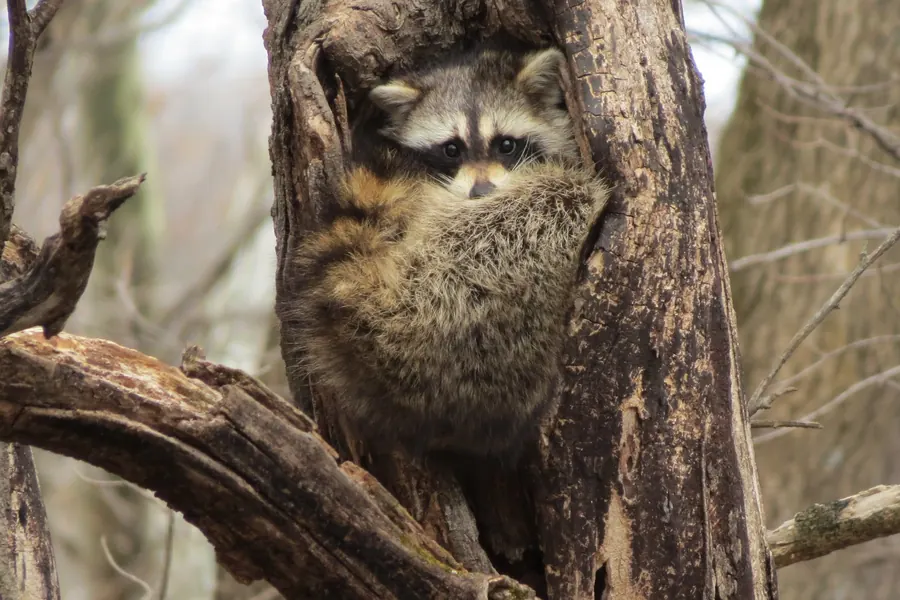
What are the signs of a raccoon in the attic?
For more on raccoon biology, see the Internet Center for Wildlife Damage Management’s raccoon biology page.
Outside, look for the opening and the route up to it. A CDC report on raccoon roundworm advises closing off access to attics and crawl spaces and clearing brush and trees away from the roof line.
Raccoons also use a latrine, a shared toilet spot. The CDC describes raccoon feces as usually dark and tubular, with a pungent odor, and notes latrines are often found in unsealed attics. Finding one changes the cleanup, as the health section below explains.
If you are not sure it is a raccoon, how to tell attic animals apart lists the checks that settle it, from the droppings to the hours it is active.
When do raccoons have young in Michigan?
The Forest Service says that across most of their range raccoons mate from January to March, with a peak in February, and generally have one litter a year. Litters of one to eight have been reported, with average litter sizes of two to five. A female that does not become pregnant in spring may breed again two to four months later, so young can turn up later in the year too. The young begin walking at four to six weeks and can generally walk, run and climb by seven weeks.
A raccoon that moved in during late winter may be a pregnant female. Removing her and sealing the hole without finding the young leaves them inside the house. Ask the operator how they will check for a litter before anything is closed. If young are found on their own, the U.S. Fish and Wildlife Service says a young animal that needs help should go to a licensed wildlife rehabilitator.
What does raccoon removal involve?
- Confirm it is a raccoon and find the entry. Look for the opening, and check the chimney and vents.
- Check for young before anything is closed.
- Get the raccoon out. That is the operator’s job; ask what method they will use.
- Close the entry with durable material. The CDC advises closing off raccoon access to attics and crawl spaces.
- Deal with the latrine and soiled insulation as a separate job.
Trapping a raccoon and letting it go somewhere else is not the answer it sounds like. The CDC says moving wildlife has helped spread rabies variants into new parts of the United States; the raccoon variant reached the mid-Atlantic states in 1977 after wild raccoons were moved there from the Southeast. Michigan has never had a detected case of raccoon rabies, the Washtenaw County Health Department says, so the point is the general one about moving wildlife.
How removal, exclusion and cleanup add up for a raccoon job is covered in the removal cost guide.
What should you ask a raccoon removal operator?
Ask which state permits cover the work, how they will get the raccoon out, and how they will make sure no young are left inside before the entry is closed. Ask too whether latrine cleanup is part of the job, given the CDC precautions below. For Michigan’s rules, see the DNR’s wildlife damage and nuisance control permits page and its raccoons page.
Are raccoon droppings in the attic dangerous?
They can be. Infected raccoons pass the eggs of a roundworm, Baylisascaris, in their feces. The CDC states that the eggs are not visible to the naked eye, become infectious after two to four weeks in the environment, and with enough moisture can survive for years. Young children are at highest risk, the CDC says, as they may be more likely to put contaminated fingers, soil or objects into their mouths. Human cases are rare (the CDC counts fewer than 25 documented in the United States) but Michigan is one of the states where cases have been reported.
For an indoor latrine, the CDC recommends an N95-rated respirator in a confined space, misting the area lightly with water to keep dust down, and wiping with hot soapy water on a damp sponge where a torch cannot be used. It warns not to use a propane torch indoors. Most chemicals do not kill the eggs; heat does.
Rabies is a smaller part of the picture. The CDC says raccoons are a rabies reservoir in the eastern United States, as far west as the Appalachian Mountains, and that rabid raccoons are rarely reported outside the eastern U.S. The Washtenaw County Health Department says raccoon rabies has never been found in Michigan, and the only rabid animals on the 2026 MDHHS map, as of October 29, are bats and one skunk. The CDC’s general advice still applies: do not approach a wild animal that seems sick or injured, especially one out during the day that is usually active at night, and call animal control instead. What animal control will handle differs from county to county in Michigan; the county lookup gives it where a county or city publishes it.
Three city pages say more about raccoons locally: Troy and Detroit on who handles one, and Ann Arbor on Washtenaw County’s rabies record for them.
Common questions
Why is there a raccoon in my chimney?
Because it can get in, and an uncapped chimney is an opening like any other. The Forest Service says raccoons mate from January to March, so check for young before anything is closed. Ask the operator how they will get the raccoon out and whether the chimney should be capped afterward.
How do I clean up raccoon droppings in the attic?
Carefully, or not yourself. The CDC recommends an N95-rated respirator in a confined space, misting the latrine to keep dust down, and hot soapy water on a damp sponge indoors. Most chemicals do not kill raccoon roundworm eggs, and a propane torch must never be used indoors.
Sources for this page
Each rule and figure on this page comes from one of these pages, read on the date given. Agency guidance is described as guidance; it is not presented as law.
- Procyon lotor (Tesky, J.L. 1995), Fire Effects Information System species reviewUSDA Forest Service (Fire Effects Information System)
- How Raccoon Roundworm SpreadsCDC
- Notes from the Field: Enhanced Surveillance for Raccoon Rabies Virus Variant and Vaccination of Wildlife for Management - Omaha, Nebraska, October 2023-July 2024 (MMWR 2024;73:933-935)CDC (MMWR)
- Baylisascariasis (Raccoon Roundworm Infection) in Two Unrelated Children - Los Angeles County (MMWR 2025, vol. 74, no. 28)CDC (MMWR)
- Preventing Raccoon RoundwormCDC
- Raccoon Latrines: Identification and Clean-upCDC
- What to do if you find a baby bird, injured or orphaned wildlifeUSFWS
- Rabies in the United States: Protecting Public HealthCDC
- RabiesWashtenaw County Health Department
- Rabies Positive Animals in Michigan: 2026 (map)MDHHS
- Rabies Prevention and ControlCDC
- Animal ControlDetroit Animal Care and Control
- Animal ControlCity of Troy Police Department
Michigan DNR pages
Linked for further reading. This page does not quote them or rely on them for its facts.
Accuracy and corrections
- Last reviewed
- , by Local Core Group, which runs this site
- How pages are made
- How this site's pages are written and checked
- Sources
- All sources and the dates they were read: sources page
This page is general information for Michiganders, not legal advice. Rules are taken from the agency that publishes them and linked to its own page; agency guidance is labeled as guidance, not law. Rules and guidance change, so check the linked page, the DNR or your local health department before acting on anything time-sensitive.
Corrections. If a rule, number or contact here is out of date, point to the agency page that shows it through the request form or by calling 616-512-2425. Each correction is checked against the source, and the page is dated when it changes.
Often comes up alongside this
Attic Cleanup, Insulation and Damage Repair
Droppings, guano and soiled insulation, plus the repairs to entry points.
Cleanup & repair →Wildlife Exclusion and Entry-Point Sealing
One-way doors, then sealing every gap with durable material. The part of the job that stops a repeat.
Exclusion & sealing →Squirrel Removal
Scratching and running overhead. Fox squirrels usually have two litters a year, so check for young before the opening is sealed.
Squirrels →Animals in the Walls
Scratching behind drywall from an animal that got in somewhere else. Dealt with where it enters.
Animals in the walls →Request help with a raccoon in the attic
Say what you are hearing or seeing and where. The call goes by ZIP to an independent wildlife control operator where one covers the address, and price and timing are set on that call.